The Leadership Gap No One Measures
Last Monday, on my way to the office, someone handed me a flyer at the station. It was one of those moments you don’t really pay attention to—you take it out of habit, more focused on the train schedule or the day ahead than on whatever piece of paper just landed in your hand. It was from the Samaritans, an organization that supports people in distress. Normally, I would have glanced at it briefly and then forgotten about it entirely. But one sentence made me stop and read it properly:“Your words are a life-saving kit.”
There was nothing remarkable about how it was written. No dramatic tone, no attempt to shock or provoke. The flyer simply explained how to recognize when someone might not be okay, even if they don’t say it directly, and how to approach them. The suggestion was disarmingly simple: start a conversation. Not a deep one, not a perfect one—just small talk. A question, a comment, anything that opens a door where there was silence before. Standing there on the platform, I realized that what struck me wasn’t the message itself, but how unfamiliar it felt when I mentally placed it in a different context: the workplace.

In most corporate environments, conversations are shaped by necessity. They exist to move things forward, to clarify, to decide, to deliver. Over time, this creates a kind of unspoken rule: if it’s not directly useful, it gets removed. Small talk is often the first thing to go, quietly categorized as inefficiency. What remains is communication that is clean and functional, but also narrow. You move from topic to topic without ever stepping outside the immediate objective, and while that may look like focus, it gradually changes the texture of how people interact. There is less room to understand how someone actually is, and more importantly, less opportunity for that to even matter.
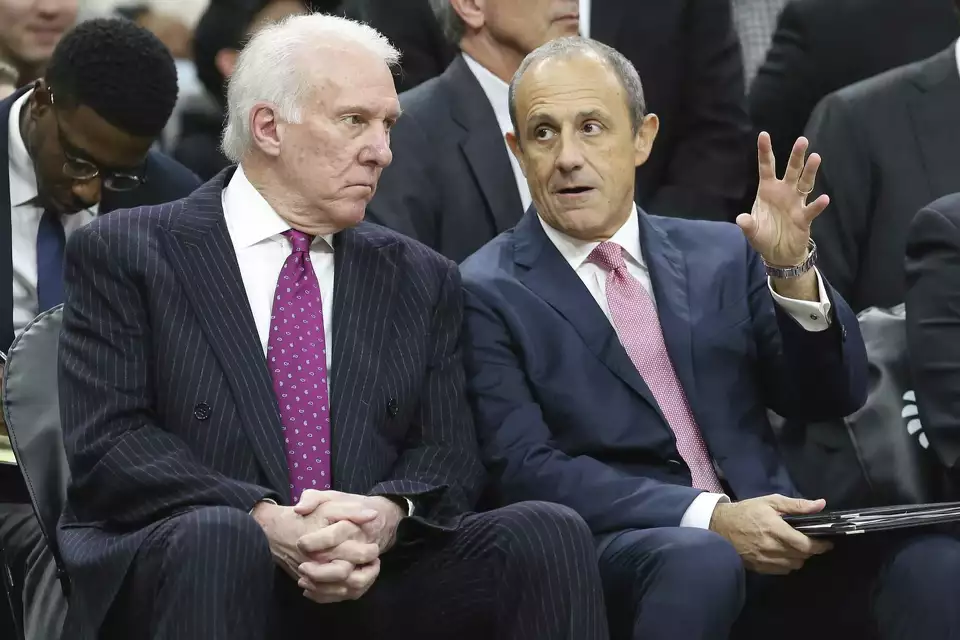
I was reminded of this again through a completely different lens while listening to a story about Ettore Messina, the first European to coach an NBA game. At the time, he was part of Gregg Popovich’s coaching staff, someone widely regarded as one of the most effective leaders in professional sport. What stood out was not a tactical insight or a performance strategy, but a simple rule Popovich imposed: before discussing basketball, every conversation should begin elsewhere. Ask how the player is feeling, ask about their family, ask what they do outside of the game. On the surface, it sounds like a matter of personality, almost a stylistic choice. In reality, it reflects something much more deliberate—the idea that before you can expect performance, you need to understand the person you are asking it from.
When you place that next to what typically happens in corporate settings, the contrast becomes clear. Trust is a word that gets used frequently, almost automatically. Managers say they trust their teams, often using it as a justification for stepping back, for not checking in, for giving space. And in principle, that sounds right. But the more I think about it, the more I question whether what we call trust is always what it claims to be.
I remember a moment that made this ambiguity very tangible. A superior once told me, “Thank you for handling this. I’ve been so busy—if it wasn’t for you, I wouldn’t have had the time.” In that instant, the effect was immediate. I felt recognized, valued, and, if I’m honest, I started projecting forward—I assumed that this kind of acknowledgment would eventually translate into something concrete, maybe even a bonus. But that initial reaction didn’t last long, because once I stepped back and looked at the broader context, a different picture emerged. I had worked on that project for an entire quarter without any meaningful feedback, without check-ins, without any real indication of whether I was moving in the right direction.
At that point, the question shifted. It was no longer about the compliment itself, but about what had been missing before it. Was that really trust, or was it simply absence? And more importantly, what does that absence do over time?
Because the effect is not neutral. After the initial satisfaction fades, something else starts to take its place. You begin to question your own work, not in a productive way, but in a way that creates uncertainty. You wonder whether what you are doing is aligned, whether it is visible, whether it actually matters. And then, almost without noticing, those thoughts extend beyond the task itself. They become practical, personal. You start thinking about outcomes, about expectations, about the things that depend on your performance being recognized. In that space, motivation doesn’t collapse dramatically—it erodes quietly.
I am exaggerating slightly, but not by much. The underlying dynamic is real, and it is more common than most organizations would like to admit. It doesn’t come from pressure or complexity, but from something much less visible: silence.
Going back to the Samaritans, they say your words are a life-saving kit. I say your words are the greatest leadership skill you have.